How to Calculate the Anion Gap from Lab Values
What the Anion Gap Indicates
The anion gap is a derived value that helps clinicians assess acid-base balance by comparing the main measured serum electrolytes in a blood sample. It is most often used as part of a serum chemistry panel or electrolyte panel to support the evaluation of metabolic acidosis and related metabolic disorder patterns.
In simple terms, the anion gap approximates the difference between positively charged and negatively charged particles in the blood. Because routine testing does not measure every ion, the gap reflects the presence of unmeasured anions. That makes it useful for detecting whether an acid buildup is due to substances like lactate, ketones, or toxins.
The anion gap is not a diagnosis by itself. It is a calculated value that must be interpreted with the full clinical picture, including the patient’s symptoms, laboratory values, medication history, and other tests. In practice, the result helps guide a diagnostic workup and often points toward a specific type of metabolic acidosis evaluation.
Because the gap depends on measured ions, it is influenced by the serum sodium, chloride level, and bicarbonate level, and sometimes potassium. Changes in these values can indicate an electrolyte imbalance or a more complex acid-base disorder.
Anion Gap Calculation Equation and Lab Values Needed
To use an Anion Gap Calculator or compute the result manually, you need specific lab values from the chemistry panel. The formula most often used is:
Anion gap = sodium − (chloride + bicarbonate)
Some equations also add potassium:
Anion gap = (sodium + potassium) − (chloride + bicarbonate)
For most routine clinical use, potassium is not included because it is present at a much lower concentration than sodium and usually does not change the interpretation much. However, understanding the difference matters when reviewing older reports or certain specialty references.
The lab values needed are:
- Sodium: the primary measured cation
- Chloride: the chief measured anion
- Bicarbonate: usually reported as total CO2 on many panels
- Potassium: included in some formulas
These measurements are taken from the patient’s electrolyte panel, and they are used to estimate the balance between measured and unmeasured ions. Since the result is based on laboratory values, the quality of the source data matters. Incorrect units, transcription problems, or sample issues can distort the answer.
A useful way to think about the formula is that sodium represents most of the positive charge, while chloride and bicarbonate account for most of the negative charge that is directly measured. The remaining difference reflects anion concentration from unmeasured substances such as proteins, phosphate, lactate, and organic acids.
Stepwise Anion Gap Calculation
This is a simple way to work through the calculation steps using typical lab values.
Example values:
- Sodium = 140
- Chloride = 102
- HCO3 = 24
Step 1: Add chloride and bicarbonate.
102 + 24 = 126
Step 2: Subtract that total from sodium.
140 − 126 = 14
Answer: Anion gap = 14
This straightforward method is the basis of most calculator tools. If potassium is used, the formula becomes:
140 + 4 − (102 + 24) = 18
This variation shows why it is essential to know which formula the lab or calculator uses. The same patient can have two different answers depending on whether potassium inclusion is part of the equation.
To interpret the result accurately, think beyond the number and consider electrolyte balance. A higher-than-expected gap may suggest excess unmeasured acids. A lower-than-expected gap may suggest hypoalbuminemia, lab artifact, or unusual cation excess.
When reviewing the result, interpret it with lab interpretation from the full chemistry panel. A single number rarely tells the whole story. For example, a normal bicarbonate level does not always exclude a developing problem, and a low bicarbonate may have several cause.
Normal Anion Gap Range and Albumin Correction
The normal range for anion gap is influenced by the laboratory method and whether potassium is included. Many modern labs use a reference interval around roughly 3 to 11 or 4 to 12 when potassium is excluded, though exact cutoffs vary. Because different analyzers and methods yield different results, it is best to read the number using the lab’s own range.
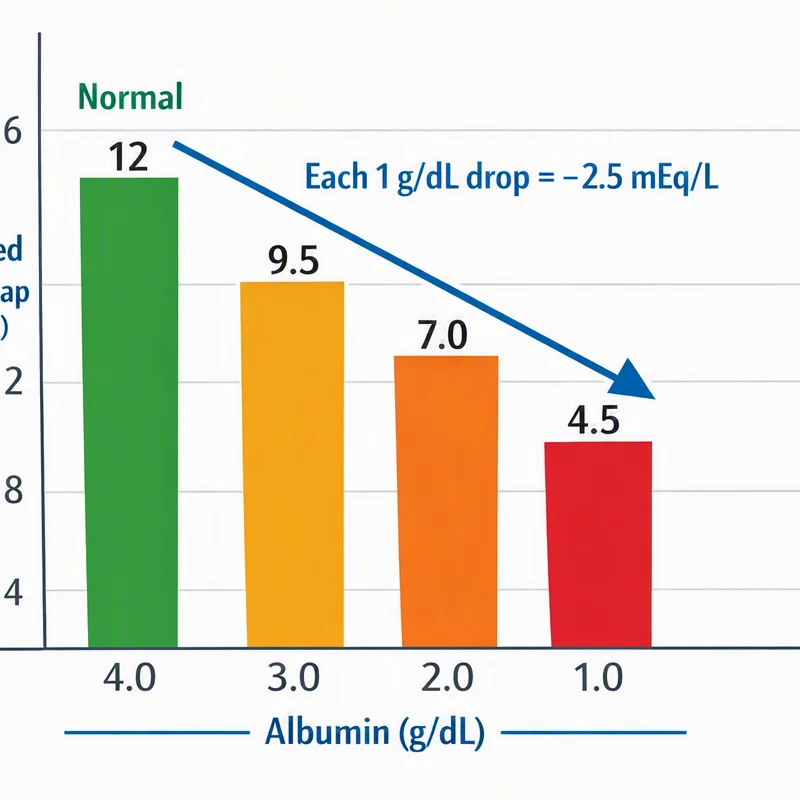
Albumin has a major effect on the anion gap because it is an important unmeasured anion. When albumin is low, the gap can appear spuriously normal or low even when an acid-base problem is present. That is why albumin correction is often necessary.
A commonly used adjustment is to add about 2.5 mEq/L to the measured gap for every 1 g/dL decrease in albumin below 4 g/dL. This gives a corrected anion gap or albumin-corrected anion gap.
For example, if the measured gap is 10 and albumin is 2 g/dL, the correction would be:
- Albumin deficit = 4 − 2 = 2 g/dL
- Correction = 2 × 2.5 = 5
- Corrected anion gap = 10 + 5 = 15
This adjustment can reveal a hidden high gap process. In a patient with metabolic acidosis, especially one with chronic illness, low protein states, or critical illness, albumin correction improves clinical interpretation.
Because albumin affects the baseline anion concentration, it is one of the most important pieces of context when reviewing a result. A number that looks reassuring may be misleading if the patient’s albumin is low. In other words, the reference range is not always enough; the result must be corrected and interpreted in clinical context.
Causes of a High Anion Gap
A high anion gap often indicates accumulation of unmeasured anions, frequently due to acid production or impaired clearance. This pattern is known as high anion gap metabolic acidosis. The most common causes include lactic acidosis, ketoacidosis, renal failure, and toxic alcohols.
Lactic acidosis occurs when lactate builds up due to poor oxygen delivery, shock, severe infection, seizures, or other states of tissue stress. The body creates acid faster than it can clear it, causing a higher gap.
Ketoacidosis occurs when ketone bodies accumulate, most often in diabetic ketoacidosis, but also in starvation or alcohol-related states. Ketones are unmeasured acids that increase the gap.
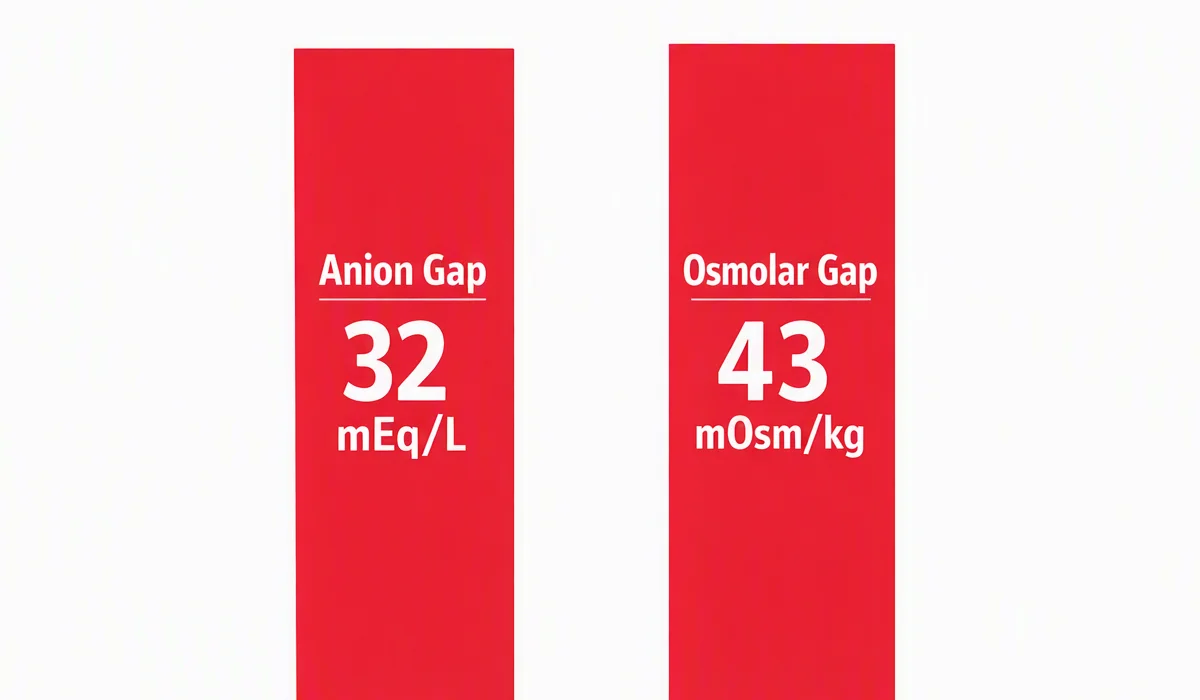
Renal failure can cause retention of acid and other solutes because the kidneys cannot excrete them normally. As acid retention increases, the gap rises.
Toxic alcohols such as methanol, ethylene glycol, and related substances are classic causes of severe high-gap acidosis. Their metabolites are acidic and may cause major metabolic abnormalities that require urgent treatment.
Other causes may include salicylate toxicity, advanced ketoacid states, and certain inborn errors, but the four categories above are the core differential. A high gap is often a clue that the patient needs immediate clinical evaluation and a broader diagnostic workup.
It is useful to pair the anion gap with the clinical story. For example, a patient with vomiting, dehydration, and hyperglycemia may be at risk for ketoacidosis, while someone with hypotension and elevated lactate may have lactic acidosis. The number helps focus the search, but it does not replace bedside assessment.
Causes of a Normal Anion Gap Metabolic Acidosis
A normal anion gap does not eliminate metabolic acidosis. It may instead simply indicate normal anion gap metabolic acidosis, also called hyperchloremic metabolic acidosis. In this condition, bicarbonate is depleted or diluted, and chloride rises to keep electrical neutrality. The result is often hyperchloremia with a normal measured gap.
Frequent causes include diarrhea, renal tubular acidosis, and some forms of kidney disease or medication effects. These conditions often lower bicarbonate without creating a large buildup of unmeasured acids.
Diarrhea leads to direct bicarbonate loss from the intestines. As bicarbonate drops, chloride increases to balance charge, and the gap may remain normal.
Renal tubular acidosis refers to a group of disorders in which the kidneys cannot properly excrete acid or reclaim bicarbonate. This leads to chronic acid-base disturbance with a normal gap pattern in many cases.
Because the chloride rises as bicarbonate falls, the serum chemistry pattern can look deceptively simple. That is why reviewing the full electrolyte panel is important. A normal anion gap does not mean the acid-base status is normal; it only means the acidosis is not driven by a major accumulation of unmeasured acids.
When this pattern appears, the next step is often a focused metabolic acidosis evaluation, which may include urine studies, medication review, and assessment for gastrointestinal losses or renal causes. In other words, a normal gap can still be clinically significant and should not be dismissed.
How to Understand anion gap Results in Medical Practice
The clearest way to read an anion gap result is to view it within the patient’s overall acid-base disorder. The number is a hint, not a standalone answer. A practical interpretation often includes serum chemistry, symptoms, and other blood gas data.
An arterial blood gas is especially helpful when acidosis or alkalosis is considered. It provides pH, partial pressure of carbon dioxide, and bicarbonate context that can confirm whether the patient has an active acid-base problem and how serious it is.
If the anion gap is elevated, clinicians often consider the cause of the excess acid and then compare the expected changes in bicarbonate and chloride. This is where the delta gap can help. The delta gap compares the rise in the anion gap with the fall in bicarbonate and may suggest whether another hidden acid-base process is also present.
For example, a patient could have high anion gap metabolic acidosis plus a concurrent metabolic alkalosis, or a high gap process mixed with normal gap acidosis. The delta gap is useful for identifying these mixed disorders.
Clinical interpretation also depends on whether the patient is stable or ill. A mild lab abnormality in an asymptomatic person may be less urgent than the same number in a person with confusion, rapid breathing, hypotension, or severe dehydration. Always relate the lab result to the patient’s overall condition and likely source of acid production or loss.
In practice, interpretation often follows this sequence:
- Confirm the chemistry values and calculation method
- Check albumin and apply correction if needed
- Review the arterial blood gas if available
- Determine whether the pattern is high gap, normal gap, or mixed
- Identify the underlying cause based on symptoms and history
Typical Pitfalls in Anion Gap Calculation
Many frequent errors can make the result inaccurate. One of the most frequent is lab error. A specimen problem, transcription issue, or analyzer issue can produce an abnormal value that does not match the clinical picture. If the result seems unexpected, repeat testing may be appropriate.
A further pitfall is ignoring units. The formula assumes the same standard unit system used by the lab. If values are reported differently or copied incorrectly, the final calculation may be wrong. Always verify the source laboratory values before interpreting the number.
Potassium inclusion is another major issue. Some clinicians and calculators include potassium, while others do not. The result changes depending on the formula, so the method must be known before comparing values over time or across facilities.
Another pitfall is missing mixed disorders. A patient may have both high gap and normal gap components at the same time. If only one process is considered, the interpretation may be incomplete. The bicarbonate can be low for more than one reason, and the full pattern matters.
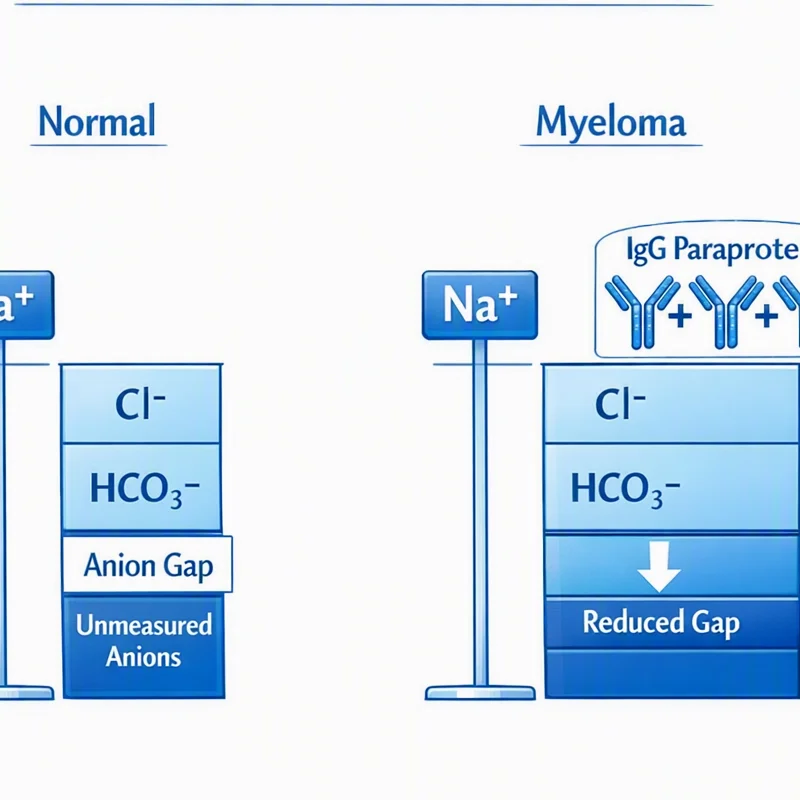
In addition, failing to account for albumin can lead to missed diagnoses. If albumin is low, the measured gap may look normal even when there is significant acid accumulation. That is why albumin correction is essential in many cases.
One useful approach is to treat the anion gap as a screening tool within a broader clinical framework. It is excellent for identifying abnormal acid-base patterns, but it must be paired with the rest of the electrolytes, the history, and targeted follow-up testing.
When to Seek Medical Evaluation
A medical evaluation is important when an abnormal anion gap is accompanied by concerning symptoms. Warning signs can include rapid breathing, confusion, severe weakness, vomiting, dehydration, chest pain, fainting, or altered mental status. These may indicate a serious acid-base emergency.
Emergency care is of special importance if there is suspected poisoning, severe hyperglycemia, kidney failure, or profound illness. Marked acidosis can become life-threatening if not treated promptly, particularly when the underlying cause is lactate acidosis, ketoacidosis, or exposure to toxic alcohols.
Even when a normal gap should not be ignored if symptoms suggest illness. A person can still have normal anion gap metabolic acidosis, dehydration, renal disease, or another disorder needing treatment. Likewise, a high gap may be the earliest sign of a dangerous process before symptoms become severe.
If the result comes from a routine panel and the person feels unwell, a clinician should review the full picture, including the electrolyte panel, albumin, and whether an ABG test is needed. Prompt medical attention can help prevent complications and identify the underlying cause early.
FAQ
How do you calculate the anion gap from lab values?
Use the standard formula: sodium minus the sum of chloride and bicarbonate. In formula form, it is anion gap = sodium − (chloride + bicarbonate). Some calculators also include potassium, so always check which method is being used. The values come from the electrolyte panel, and the result is then interpreted alongside albumin and the clinical picture.
What is considered a normal anion gap?
A typical normal range is often around 3 to 11 or 4 to 12 when potassium is not included, but the exact reference interval depends on the laboratory and analyzer. Always use the lab’s own range for interpretation. Albumin levels also affect what counts as normal, so a corrected anion gap may be more informative in some patients.
Why do you correct the anion gap for albumin?
Albumin is an important unmeasured anion, so low albumin can make the measured anion gap appear falsely normal or low. Albumin correction adjusts for that effect and can reveal a hidden high anion gap metabolic acidosis. This is especially useful in patients with chronic illness, malnutrition, or critical illness.
What causes a high anion gap?
Frequent causes include lactic acidosis, ketoacidosis, renal failure, and toxic alcohols. Such conditions bring unmeasured acids to the blood, raising the gap. Other causes exist, but these https://anion-gap-help704.capitaljays.com/posts/can-kidney-failure-increase-the-anion-gap are the primary ones to consider during clinical evaluation.
Can a normal anion gap still mean metabolic acidosis?
Yes. A normal anion gap can occur in normal anion gap metabolic acidosis, also called hyperchloremic acidosis. Frequent reasons include diarrhea, renal tubular acidosis, and bicarbonate loss. The anion gap aids identifying the disorder, but it does not rule out acidosis by itself.