Anion Gap Calculator for Starvation-Related Ketoacidosis: How to Read the Results
Understanding Starvation Ketoacidosis?
Starvation ketoacidosis is a type of metabolic acidosis that can occur when the body is not taking in enough energy from food for a extended time. In a fasting or undernourished state, the body shifts toward fat breakdown for fuel, producing ketones as an additional energy source. When ketone production increases enough, acid accumulates in the blood and can disturb the normal acid-base balance.
This condition is often associated with a starvation state, malnutrition, or a nutritional deficiency. It may also occur when there is very low carbohydrate intake, because glucose availability is limited and the body must rely more heavily on ketone metabolism. Although ketosis can be a normal physiologic adaptation, starvation ketoacidosis is different because the acid load becomes clinically significant and can contribute to a true metabolic emergency.
In practice, the distinction between simple ketosis and starvation ketoacidosis matters. Ketosis may cause elevated ketones without major symptoms, while starvation ketoacidosis can produce metabolic acidosis diagnosis findings on bloodwork and may require urgent treatment. A key part of clinical assessment is checking whether the patient has enough circulating glucose, what the blood chemistry shows, and whether symptoms suggest a worsening acid burden.
The main acids involved are ketone bodies, especially beta-hydroxybutyrate and acetoacetate. These compounds accumulate when the body cannot use glucose normally or when intake is too low to support metabolism. Because they are unmeasured anions, they can increase the anion gap and signal a high gap acidosis pattern on laboratory testing.
How the Anion Gap Calculator Functions
An anion gap calculator is a basic tool that uses common results from an electrolyte panel to estimate the discrepancy between observed positively charged and negatively charged ions in the blood. In standard use, it depends on the serum sodium, serum chloride, and serum bicarbonate values. These numbers allow clinicians calculate anion gap and detect whether there are unmeasured acids in the circulation.
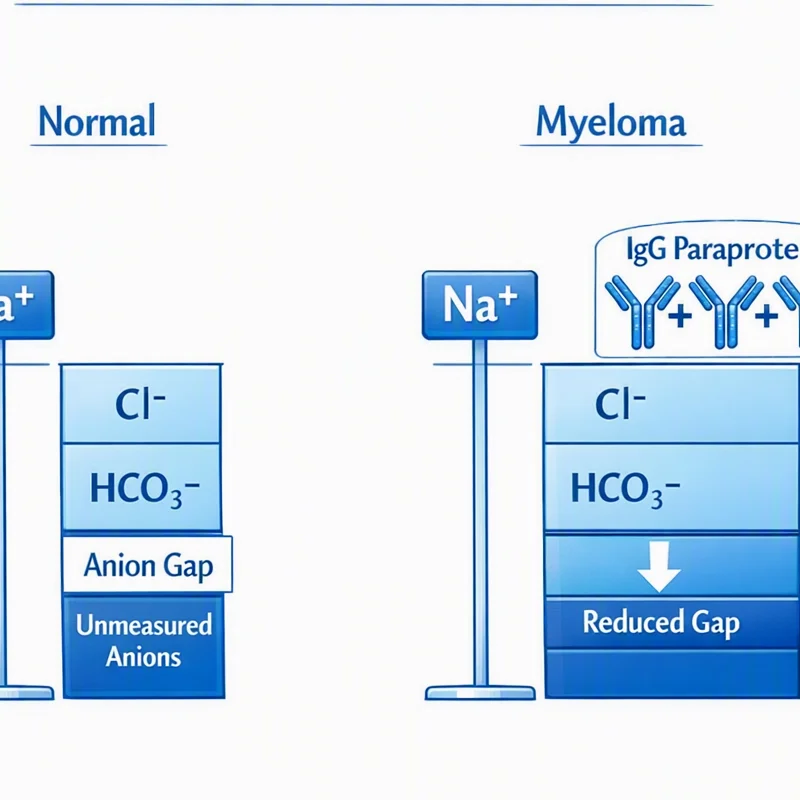
The basic idea is that sodium is the primary measured cation, while chloride and bicarbonate are primary measured anions. When unmeasured acids such as ketones, lactate, or toxic metabolites accumulate, bicarbonate tends to drop as it buffers acid, and the gap between cations and measured anions increases. That is why the calculator is useful for detecting high anion gap metabolic acidosis.
A typical formula is:
Anion gap = sodium - (chloride + bicarbonate)
Some labs or clinicians may use alternative reference approaches, but this standard version is broadly applied for acid-base interpretation. Because the values come directly from routine blood tests, the calculator is quick and convenient for everyday lab interpretation.
The calculator does not confirm starvation ketoacidosis by itself. Instead, it supports metabolic acidosis diagnosis by showing whether the pattern fits an elevated gap. A normal or only mildly changed value may suggest another explanation, while a clearly elevated result raises concern for a more serious acid load. In that sense, the tool is best viewed as part of a broader medical evaluation rather than a stand-alone answer.
Reasons why Starvation Ketoacidosis Raises the Anion Gap
Starvation ketoacidosis increases the gap because the body creates more ketone bodies than it can easily eliminate or buffer. During prolonged fasting or severe low intake, insulin levels decrease and fat breakdown accelerates. The liver converts fatty acids into ketones, especially beta-hydroxybutyrate and acetoacetate. These are undetected anions, so they contribute to a high anion gap.
As the ketones increase, bicarbonate is consumed while trying to buffer acid. This lowers bicarbonate, which in turn raises the anion gap when calculated from the electrolytes. That is why a patient in starvation ketoacidosis may show low bicarbonate on a chemistry panel and an increased gap on the anion gap calculator.
Beta-hydroxybutyrate is often the predominant ketone in more severe acidotic states, and measuring it directly can help confirm the cause of the elevated gap. Acetoacetate also plays a role, though proportions can vary depending on the redox state and severity of illness. Together, these ketone bodies explain why the laboratory pattern mimics other forms of high anion gap metabolic acidosis.
It is also important to evaluate overlap with lactic acidosis. If a patient has poor intake plus infection, hypoperfusion, or another stressor, lactate may go up at the same time as ketones. In that situation, the anion gap may reflect more than one acid source. That is why evaluation should include both ketones and lactate, along with the overall clinical picture.
How to Determine the Anion Gap Step by Step
To apply the anion gap calculator accurately, begin with accurate lab values from the chemistry panel. The key electrolytes usually are sodium, chloride, and bicarbonate. Verify the values are taken from the same sample whenever possible, because timing differences can affect interpretation.
This is the step-by-step process:
- Note the serum sodium value.
- Identify the serum chloride value.
- Find the serum bicarbonate value.
- Apply the anion gap formula: sodium minus the sum of chloride and bicarbonate.
- Compare the result with the laboratory’s reference range.
As an example, if sodium is 140, chloride is 102, and bicarbonate is 18, the calculation is 140 - (102 + 18) = 20. That pattern points to an elevated anion gap and should prompt consideration of causes such as ketones, lactate, renal impairment, or toxins.
Because albumin is a major unmeasured anion, low albumin can mask part of the true acid burden. That is why albumin correction is often important. If serum albumin is low, the measured anion gap may seem falsely normal or only slightly elevated. A corrected anion gap can provide a more accurate picture of the patient’s acid load.
In practice, the calculation is only one piece of the puzzle. A clinician may review blood gas results, the broader blood chemistry, kidney markers, and the clinical story. That combination allows more precise acid-base interpretation and helps distinguish starvation ketoacidosis from other forms of metabolic disturbance.
Interpreting Anion Gap Findings in Starvation Ketoacidosis
Interpreting the result starts by asking whether the patient has a normal anion gap or an elevated anion gap. A within-range value does not fully rule out starvation ketoacidosis, especially when albumin correction has not been considered or if the condition is initial. However, a obviously elevated value is more consistent with metabolic disturbance from accumulating acids.
In starvation ketoacidosis, the combination of low intake, possible undernutrition, and increasing ketone production often leads to a classic pattern: low bicarbonate, elevated ketones, and a widened anion gap. If the patient also has symptoms such as weakness, nausea, or rapid breathing, the concern becomes greater. This is where lab interpretation should be paired with symptoms and history rather than viewed in separation.
It is also useful to assess acid-base balance using a blood gas. The pH may show acidemia, and the bicarbonate level often supports metabolic acidosis. If respiratory compensation is present, carbon dioxide may be reduced than expected. These findings help define how far the condition has progressed.
When the anion gap is only mildly elevated, the pattern may suggest early ketosis rather than severe ketoacidosis. When it is distinctly elevated, especially alongside low bicarbonate and elevated ketones, the concern shifts toward a larger acid burden. That distinction matters because it influences urgency, treatment, and the need for broader evaluation.
Frequent Causes of High Anion Gap Metabolic Acidosis
Prolonged fasting ketoacidosis is one cause of high anion gap metabolic acidosis, but it is not the only one. A comprehensive differential is essential because other disorders can produce a similar lab pattern and may require urgent treatment. The major categories include ketoacidosis, renal impairment, toxin exposure, and severe infection.
Renal failure can increase the anion gap because the kidneys cannot clear acids effectively. As kidney function worsens, retained acids build up and bicarbonate falls. This is why checking renal function is part of the standard workup when the anion gap is elevated.
Toxic ingestion is another key consideration. Substances such as toxic alcohols can create dangerous acids and produce severe metabolic abnormalities. These cases may look similar at first glance, so history, osmolar testing, and targeted labs are often needed to separate them from starvation ketoacidosis.
Sepsis may also cause a increased anion gap through lactic acidosis, poor perfusion, and organ dysfunction. In a patient with poor intake, infection can worsen ketone production while also raising lactate. That combined effect can create a particularly serious metabolic problem.
Because these disorders can overlap, the role of the anion gap calculator is to support early recognition, not to replace diagnosis. It helps reveal the presence of excess acid, but identifying the underlying cause requires clinical judgment, labs, and sometimes urgent imaging or toxicology testing.
When to Seek Prompt Clinical Evaluation
Anyone who with possible starvation ketoacidosis should get timely medical evaluation if symptoms are progressing or serious. Red flags include confusion, dehydration, repeated vomiting, and tachypnea. These signs may indicate worsening acidosis, volume depletion, or another serious condition such as infection or toxic exposure.
Confusion can signal impaired brain perfusion, severe metabolic disturbance, or a separate problem such as electrolyte imbalance. Dehydration can exacerbate ketone production and impair kidney clearance of acid. Vomiting can reduce intake further and make the state more severe. Tachypnea often reflects respiratory compensation for metabolic acidosis and should not be ignored.
If the person has diabetes, prolonged fasting, a known eating disorder, recent illness, or signs of malnutrition, the threshold for evaluation should be minimal. Blood tests may include glucose, ketones, blood gas, electrolytes, albumin, lactate, kidney markers, and sometimes toxicology studies. These tests help determine whether the issue is isolated starvation ketoacidosis or a broader high gap acidosis problem.
The key point is that starvation ketoacidosis can become serious even when the history sounds simple. If symptoms are significant, or if the patient cannot keep fluids down, urgent care is appropriate. The safest approach is to treat concerning symptoms as a reason for timely assessment rather than waiting for the condition to resolve on its own.
Frequently Asked Questions
What is the anion gap in starvation ketoacidosis?
In starvation ketoacidosis, the anion gap is often high because ketone bodies such as beta-hydroxybutyrate and acetoacetate accumulate as unmeasured acids. The exact number depends on the person’s lab values, including sodium, chloride, and bicarbonate. A normal result does not fully rule out the condition, especially if albumin correction has not been considered.
How to use anion gap calculator?
To use an anion gap calculator, enter the https://privatebin.net/?c4c10f5fd4198609#B9qZZPGa5zaTpUCU79RkkayotzESZzg4ezjFMYXgZ3Uh serum sodium, serum chloride, and serum bicarbonate from the electrolyte panel. The calculator applies the anion gap formula and displays whether the result is normal. It is most helpful along with blood gas testing, renal function assessment, lactate, and a full clinical assessment.
Can you get starvation ketoacidosis without diabetes?
Yes. Starvation ketoacidosis can happen without diabetes when there is prolonged fasting, very low intake, or malnutrition. In that setting, the body shifts into a starvation state and accelerates fat breakdown, which raises ketosis and can progress to metabolic acidosis. Diabetes is not required for this process.
Does starvation ketoacidosis always cause a high anion gap?
No, not always. Although starvation ketoacidosis commonly causes a high anion gap metabolic acidosis, the result can appear less striking early on or if albumin is low. That is why albumin correction and careful lab interpretation matter. A near-normal result does not fully exclude clinically important acid-base problems.
When should someone with suspected starvation ketoacidosis get medical help?
Someone should get prompt medical evaluation if there is confusion, dehydration, vomiting, tachypnea, inability to drink fluids, or worsening weakness. A person with suspected starvation ketoacidosis also needs urgent care if blood tests show a significantly elevated anion gap, low bicarbonate, or concerning signs of infection, kidney problems, or possible toxic alcohols exposure.